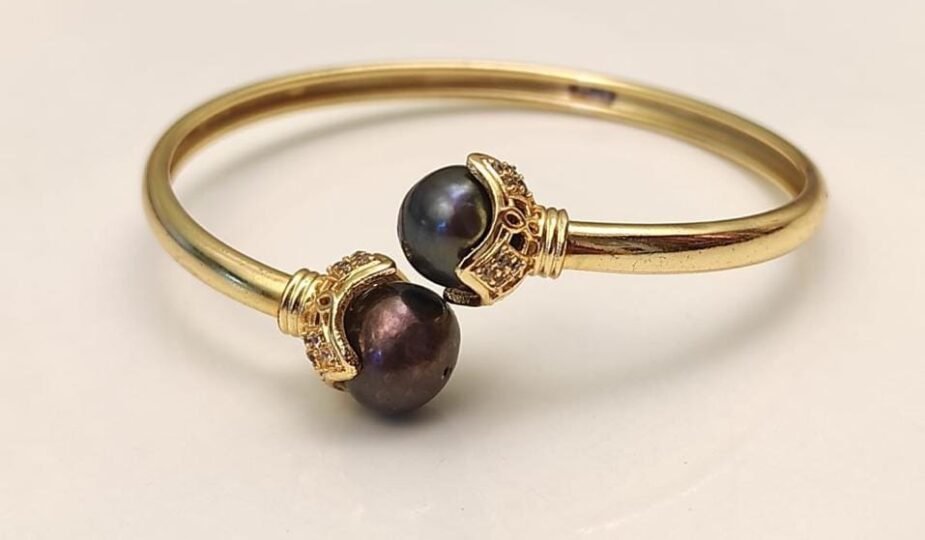
Choosing a pearl bracelet or kada starts with the kind of fit you like. A linked bracelet moves with the wrist, while a structured kada keeps a defined shape. Closures also vary between designs, so check the individual listing even when two pieces look similar in a photo.
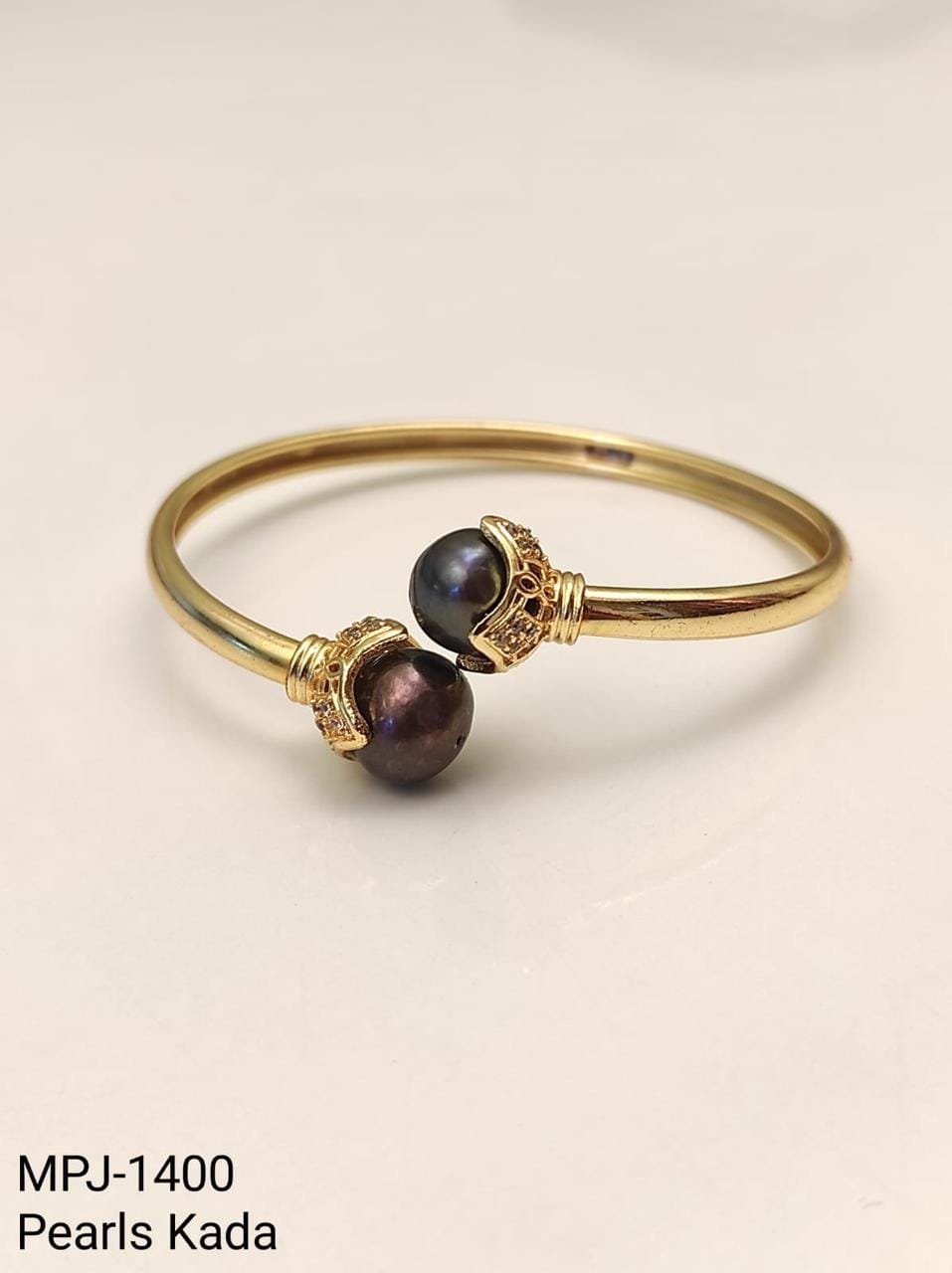
Compare the closure and fit
Look for a clasp, extender chain, open cuff or hinged opening in the product photos and details. Use a soft tape to measure where the piece will sit. If you prefer a little movement, compare the measurement with a bracelet you already find comfortable. For a rigid kada, check any stated inner dimension as well.
Pick a profile that works with your sleeves
A neat strand sits easily next to a fitted cuff. A wider kada is easier to see with sleeveless, shorter or plain sleeves. The Pearl Bracelet and Kada Collection shows both cuff and linked styles, each with its own variant photo.
Choose a finish you can wear often
Gold-tone elements can echo warm zari, while silver-tone links can pick up cooler embroidery or a watch finish. For colour, the double-row pearl bracelet has pink and pink-and-green variants in both finishes. Select a variant before comparing its closure and details.
Measure before choosing a pearl bracelet or kada
Check the closure against your wrist measurement
Wrap a flexible tape around the part of the wrist where the piece will sit. Keep the tape flat and avoid pulling it tight. For a hinged kada, check the inner dimensions and opening details. For a link bracelet, check the stated length including or excluding the extender, if specified.
When trying a pearl bracelet or kada, bend your wrist and move your fingers as you normally would. A loose piece may slide toward your hand and a wide band may sit against the cuff of a fitted blouse. Try the piece with the blouse you plan to wear, especially if it has embroidered cuffs or a row of buttons.
Check wrist movement and sleeves
If you plan to layer a pearl bracelet or kada with a watch, try them on separate wrists first. Check whether the watch clasp or a raised setting rubs against the pearls when the pieces are together. With a pearl cuff that has decorated ends, keep those ends visible rather than covering them with other pieces.
For practical advice on caring for pearl surfaces on wrist jewellery, see GIA’s pearl care and cleaning guide.
Compare the parts that touch your wrist
For a rigid kada, look at the profile of the inner surface and the placement of the opening. For a link bracelet, pay attention to the space between the links and where the clasp lands when worn. If the bracelet has an extender, check whether the spare links will sit near the palm or hang clear of it.
A pearl bracelet or kada worn on your dominant hand may see more contact with a desk, bag handle or phone. Try the piece on both wrists with an outfit you wear often. The piece may feel different if the cuff on one sleeve is narrower or if you already wear a watch.
When buying a pearl bracelet or kada as a gift, ask for the recipient’s comfortable bracelet length or check the dimensions of a favourite piece. A reference measurement is more useful than guessing from the photo.
Read next in Eflina’s pearl jewellery series: How to Style Green Pearl Jewellery with Silk Sarees.